


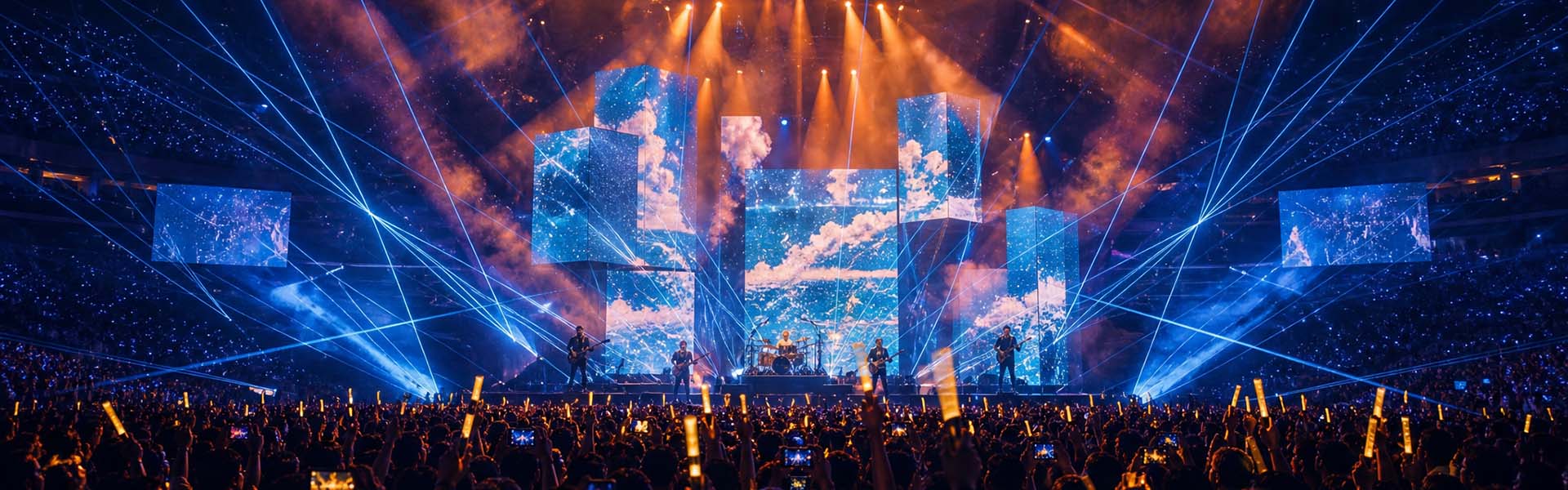


OLED (Organic Light-Emitting Diode) is self-emissive—each individual pixel generates its own light. This allows for per-pixel dimming, enabling infinite contrast ratios and the deepest possible blacks.
Traditional LED displays (LCD with LED backlighting) are transmissive—they rely on a backlight unit composed of LED chips to illuminate liquid crystals, which then filter light to produce colors. This means blacks are never truly black, as some light inevitably "bleeds" through.
Performance Comparison: Where Each Technology Excels
Aspect OLED LED (Mini/Micro LED)
Contrast Ratio Infinite (true black) Near-infinite with advanced local dimming
Color Accuracy Exceptional, wide gamut Highly accurate, continually improving
Black Levels Perfect Very deep (near-black)
Response Time Microseconds—no motion blur Millisecond-level, greatly improved with Mini/Micro
Peak Brightness Moderate (500–1000 nits typical) Ultra-high (2000+ nits, ideal for HDR and outdoor use)
Viewing Angles Wide, minimal color shift Wide, with newer IPS/advanced LED panels
Thickness & Flexibility Ultra-thin, foldable, rollable Becoming thinner; now flexible and transparent variants available
The Durability Factor: Organic vs. Inorganic
One of the most significant advantages LED holds over OLED is longevity.
OLED panels use organic compounds that emit light when electrically stimulated. Over time, these compounds degrade, resulting in reduced brightness and the notorious "burn-in" effect—permanent ghost images of static content.
LED technology is built on inorganic materials (gallium nitride, etc.), which are far more stable. This translates to:
Significantly longer operational lifespans (50,000–100,000 hours)
Zero risk of permanent image retention
Consistent color and brightness over years of use
For commercial environments where displays run 24/7—such as digital signage, control rooms, and outdoor advertising—this durability is non-negotiable.
Why Mini/Micro LED Changes the Game
The real paradigm shift lies in the miniaturization of LED chips. By reducing the size of individual LEDs to micron-level dimensions, Mini and Micro LED technology delivers the best of both worlds:
Pixel-level light control rivaling OLED‘s contrast
Unmatched brightness for HDR and sunlight-visible applications
Modular design enabling seamless large-format screens with no visible bezels
Energy efficiency that reduces operational costs over time
Industry experts widely regard Micro LED as the leading candidate for the "ultimate display technology"—combining OLED‘s visual prowess with LED‘s industrial-grade reliability.
Form Factor Innovation: Beyond the Rectangular Screen
Modern LED technology is breaking free from traditional form factors:
Transparent LED screens with over 90% light transmittance, perfect for retail storefronts and architectural glass
Flexible and curved LED panels that wrap around pillars and unconventional surfaces
Ultra-thin indoor LED walls that rival the slimness of OLED displays
These innovations are transforming displays from passive viewing devices into dynamic architectural elements and smart interactive surfaces integrated with AI-driven sensing capabilities.
Cost and Scalability: The Economic Advantage
When it comes to large-format displays (over 100 inches), LED offers a compelling cost advantage:
OLED manufacturing becomes exponentially more expensive as size increases due to complex evaporation processes and low yields
 HD COLOR
 86-15889379986
 HD color